

Kate Yablunovsky says Russians do blush, actually
"With Ilya, a lot of that 'Russianness' comes from restraint rather than excess."

Kate Yablunovsky is a Canadian casting director who has worked on award-winning films like Pieces of a Woman and Splitsville—2025’s funniest movie, in this publication’s correct opinion. Lately, though, you may have seen her name popping up in The New York Times or on Late Night with Seth Meyers for her work as Connor Storrie’s dialect coach on Heated Rivalry, a lil global phenomenon that has—rightly—infiltrated New Year’s Eve, Milan and Paris Fashion Weeks, the Golden Globes, bookstores both local and online, the Olympics, SNL, the NYC mayor’s and Canadian prime minister’s offices, and, of course, our deeply hooked collective consciousness. Recently, when I was scrolling Instagram in an elevator, an interview with Hudson Williams and Connor popped up and started playing with full blast audio; I quickly shut it off and apologized to the stranger I was sharing the lift with. “It’s so good,” she said. We spent the ride up the next three floors discussing the show.
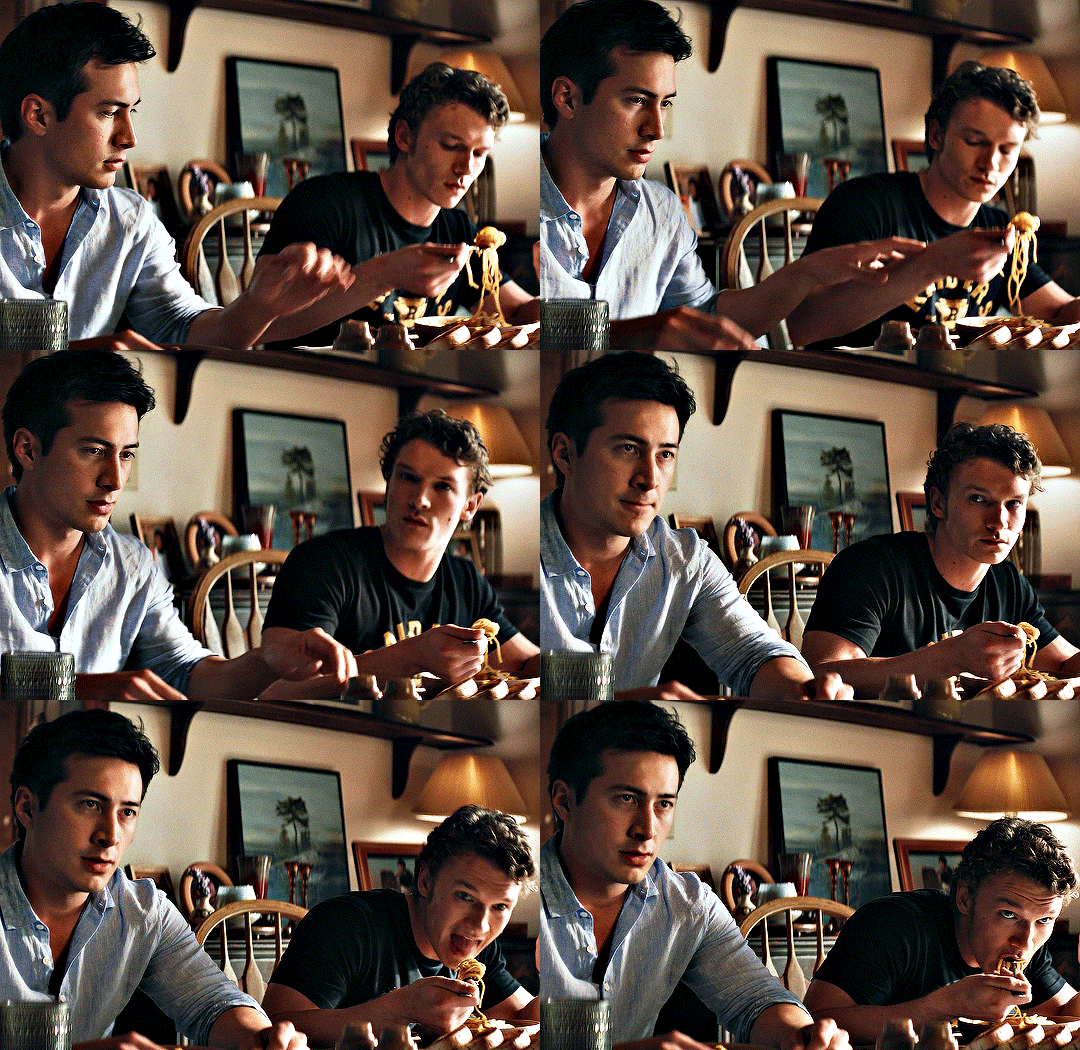
Among everything that is so impressive about the show (chemistry, cinematography, needle drops, butts, you name it), the very American Connor Storrie’s ability to fully disappear into the very Russian Ilya Rozanov is at the top of the list of things I wanted to know more about, and, duh, share with you here. So I reached out to Kate, and she was generous enough to give us le inside scoop on her job and what it was like on set.
First of all, welcome to Hot Tip! And thank you so much for chatting about your incredible work and helping to create such an immersive, authentic world on Heated Rivalry. Or should I say, spasibo.
Spasibo! Thank you! I’m so happy to be here. Everyone on Heated Rivalry, the cast and the crew, was incredibly present and gave their all. There was a real sense of care and intention behind the work—a shared desire to tell this story honestly, and I think that commitment is a big part of why the show feels so authentic.
You primarily work as a casting director, and there’s no better example of the art form that is casting than Heated Rivalry, which brought two completely unknown, super talented actors into Beatlemania territory basically overnight. In 2026, the Oscars will also finally include an Achievement in Casting category, for the first time ever (!) which feels incredibly overdue. What was your journey to this career path?
Casting was never something I planned. It really found me, and I’m so grateful it did. When I was in film school, I volunteered anywhere I could in the industry just to meet people, make connections, and open doors for myself after graduating. One of those gigs was operating a camera at an audition session for Bruno Rosato Casting. I went in for the day and completely fell in love with that world.
I asked Bruno for an internship because I just wanted to keep coming back. He didn’t offer it on the spot, but a few weeks later he called. That internship turned into a job, then a promotion to associate, then casting director. Today, Bruno Rosato and I are partners, and we co-own Rosato Yablunovsky Casting together.
Casting is such a foundational part of why people connect to characters and fall in love with a story, so seeing it recognized with its own Oscar category is incredibly encouraging. It feels like the industry is finally acknowledging that [this work] is creative, intuitive, and absolutely central to storytelling.
I also want to give huge credit to Lewis Kay Casting, who cast Heated Rivalry. Their work is exceptional.
We’re also living in an extremely bizarre and rapidly changing moment in this industry with technology, where you’ve got AI “actresses” popping up and AI tools being used to “enhance” non-English dialogue, i.e. in The Brutalist, for which Adrien Brody ultimately won an Oscar. In that movie, editors used a tool called Respeecher to adjust the actors’ Hungarian dialogue, making it “perfect…so that not even locals will spot any difference.” Where do you as both a casting director and dialect coach land on the debate over authenticity as a human vs. “perfection” in language?
I’m very firmly on the side of humanity. Accents carry history, emotion, insecurity, pride. When you sand all that down in pursuit of “perfection,” you lose something essential. I’m far more interested in truth than flawlessness. As both a casting director and dialect coach, I believe audiences connect to sincerity, even when it’s imperfect, because that’s how real people speak. Accents and languages tell stories, and stories need people.
That said, on a practical level, especially with accents, the circumstances aren’t always ideal. It depends on the time available, the performer’s ability to grasp language and accent, and the difficulty of the language itself. Hungarian, for example, is extremely complex. In cases like that, the craft of performance has to come first. Sometimes tools like this are used simply to make something believable rather than distracting.
I believe in ethical use of AI. If it’s supporting an artist and not disrespecting, erasing, or cheating anyone, then it becomes another tool available to help tell the story.
How did you end up working as a dialect coach on Heated Rivalry, and were you part of the casting process, knowing that someone with serious language skills would be required for this role?
I joined the show as the dialect coach fairly close to the start of principal photography, while the director and producers were still finalizing the Russian-speaking roles. When I first saw the volume of Russian text and realized how tight the timeline was, I did feel a bit nervous about how much would need to be accomplished in a very short amount of time, [but] after our first call, I felt confident that Connor would be able to meet the challenge and do justice to the Russian language, the accent, and the full embodiment of Ilya.
I was incredibly fortunate to work with Connor Storrie. He’s not only a very talented actor, but also an intelligent, thoughtful person with a real aptitude for languages. He approached the work with curiosity, discipline, and generosity. Working together was a genuinely rewarding experience.
On that note: Texas native Connor has said that he started working with you just one week (!!!) before shooting started, and then also learned Russian with you for four hours a day during the duration of the six-ish week shoot. Were you exclusively working on dialogue from the show, or like, proper Russian grammar, conjugation, tenses, etc.?
We worked on everything that helps a language and an accent feel authentic. That meant learning the [dialogue] word-by-word so he fully understood what he was saying and could connect it to the emotional life of the character. We focused on stress, intonation, expression, and even body language. We also touched on grammar, conjugation, and tenses, but always in direct relation to the script in front of us.
The goal was never perfection. It was about making the language feel natural enough that he didn’t have to think about it while performing, so the focus could stay on the scene and the relationship. And Connor handled that challenge with flying colors.
So it was like real school, smack in the middle of an already super tight shooting schedule.
It was accelerated and intense. For Connor, it was a crash course layered on top of an already demanding shoot, with other skills he was mastering at the same time, like ice skating and hockey. But he showed up every single day ready to work, and that level of commitment made all the difference.
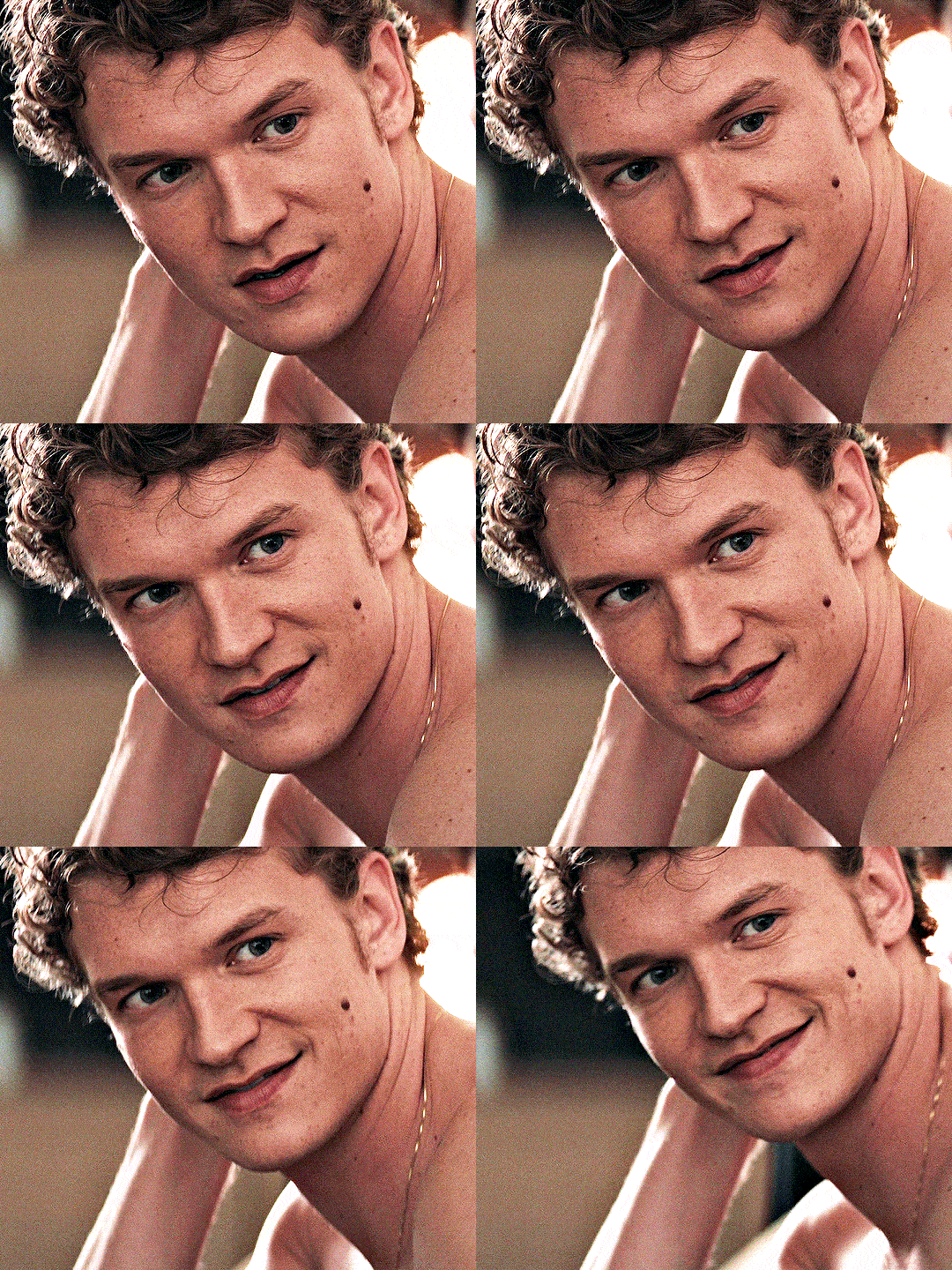
I’m so glad you mentioned the physicality, because it’s so much more than just the language and voice that make Ilya so real. Everything from how Connor moves his face to how he stands in the room are just so Russian. Even the yearning feels Slavic.
Absolutely. Language never exists in isolation. Physicality, posture, and even how emotion shows up in the face are all closely tied to culture. With Ilya, a lot of that “Russianness” comes from restraint rather than excess. Emotion often lives just under the surface, in stillness, in the eyes, in what isn’t said or shown right away.
When learning a dialect, you’re also learning a culture and how people express themselves, not just how they sound. Intonation matters, but so does how the mouth and tongue move, which can subtly affect psychology and presence. You often see this with people who speak multiple languages, where their demeanor shifts between languages.
The physicality and expression you’re noticing are Connor’s creation. That comes from his skill as an actor, and from his comfort with the language, the intonation, and his exploration of the culture.
I love the idea that teaching a language isn’t only about the words.
People often assume accent work is just about copying sounds, but a big part of it is learning what not to do. Every language and accent has habits that immediately give someone away as a non-native speaker. A lot of my work is identifying and removing those patterns so the accent stays consistent and believable.
At the same time, the work has to adapt to the individual actor. Everyone processes language differently, so the approach has to be tailored to their strengths while still aiming for the same level of accuracy.
Given the time constraints and relatively low budget, I’d have to imagine the set was a super collaborative, well-oiled machine.
Totally. It was collaborative, efficient, and honestly kind of magical because everyone trusted each other. It was one of the nicest sets I’ve ever been on. People were kind, professional, and supportive, and they kept their sense of humor and really looked out for one another despite the long hours and inevitable challenges.

 Tiktok failed to load.
Enable 3rd party cookies or use another browser
According to the New York Times, you also translated all the necessary dialogue into Russian. Were you constantly on set for real-time changes to the script, and are you aware of the impact said translations have had, literally globally, on where the bar has now been set in our love lives?
Yes, I was on set for all of the Russian scenes. Once we got to set, the script itself didn’t really change anymore, because anything involving language or accent needs preparation ahead of time. Actors have to practice the text and the dialect in advance.
Where changes did happen was during the prep and rehearsal phase. Sometimes we’d adjust wording to make a line easier for a non-Russian speaker to deliver naturally, while always preserving the original meaning and intention. The goal was to help the actor express the moment as truthfully as possible, in Russian, without the language getting in the way of the performance.
As for the impact, that really comes from the mastery of the writing. [Author] Rachel Reid’s original work, and [show creator] Jacob Tierney’s adaptation of it, created something deeply emotional and honest. That response, where viewers watch it and think, “This is what I want for my own love story,” comes directly from how beautifully the text was written and adapted.
When Ilya wins the cup in episode two, there’s a bit of Russian that doesn’t get translated in the subtitles. Am I correct in understanding he says, “for you, mama?”
Yes, you’re exactly right. It’s very intimate, and it’s meant for him and for the audience that’s paying close attention.
I don’t have any data to back this up, but I feel like interest in studying Russian must be surging right now. Are there any particularly useful tools, cultural, educational, or otherwise, you’d suggest for anyone wanting to start? I know a lot of non-native English speakers watch Friends, for example, to learn the language.
I always tell people to start with something they already love. Watch Russian films or series, listen to music, follow creators online. Language learning works best when it’s tied to curiosity and pleasure, not pressure. You don’t need perfection, just consistency and genuine interest.
The language proficiency is so impressive throughout, but no part more so than the four-page Russian monologue in episode five. How did you and Connor work together to prep for that, and when in the sequence of shooting did it happen?
Luckily, the monologue was shot later in production, which gave us some time to work toward it. It was definitely a point of pressure for both of us. It’s the most demanding Russian dialogue I’ve ever had an actor prepare.
With text like that, the goal isn’t a technically perfect accent. It’s about finding a balance where the accent supports the performance instead of overpowering it. As a dialect coach, my focus is always on clarity, intention, and emotional truth first. If the actor is fully present in what they’re saying, the language feels real, even if it isn’t flawless.
Connor approached it with a lot of sensitivity and focus, and the result was incredibly moving. Watching him perform that monologue on set genuinely made me emotional.
Per GQ, showrunner Jacob Tierney reportedly asked you how much of a certain monologue take he could use in the show, and you said “All of it. He humbles me.” What was the vibe on set watching that happen, and how rewarding has the feedback been, seeing all the work you put in together pay off?
The set was very quiet and focused. Everyone understood the importance of the scene and gave Connor the space he needed to do the work. Seeing how that moment ultimately resonated with audiences has been incredibly rewarding—it makes all the long hours of preparation feel worthwhile. I’m deeply grateful to the team, to Connor, and to the audience who noticed and cared about the details.
In addition to the spot-on Russian, Connor also spends the rest of the show speaking English with a Russian accent, and Shane even asks Ilya at one point “when did your English get so good?” Did y’all also work together on the evolution of his accent, given that the show takes place over nearly a decade?
Language evolves as people grow more comfortable and fluent. As time passes in the story, Ilya’s ease with English increases, and that naturally affects pronunciation, rhythm, and confidence. Connor was deeply engaged with that progression, which helped it feel organic rather than performative.
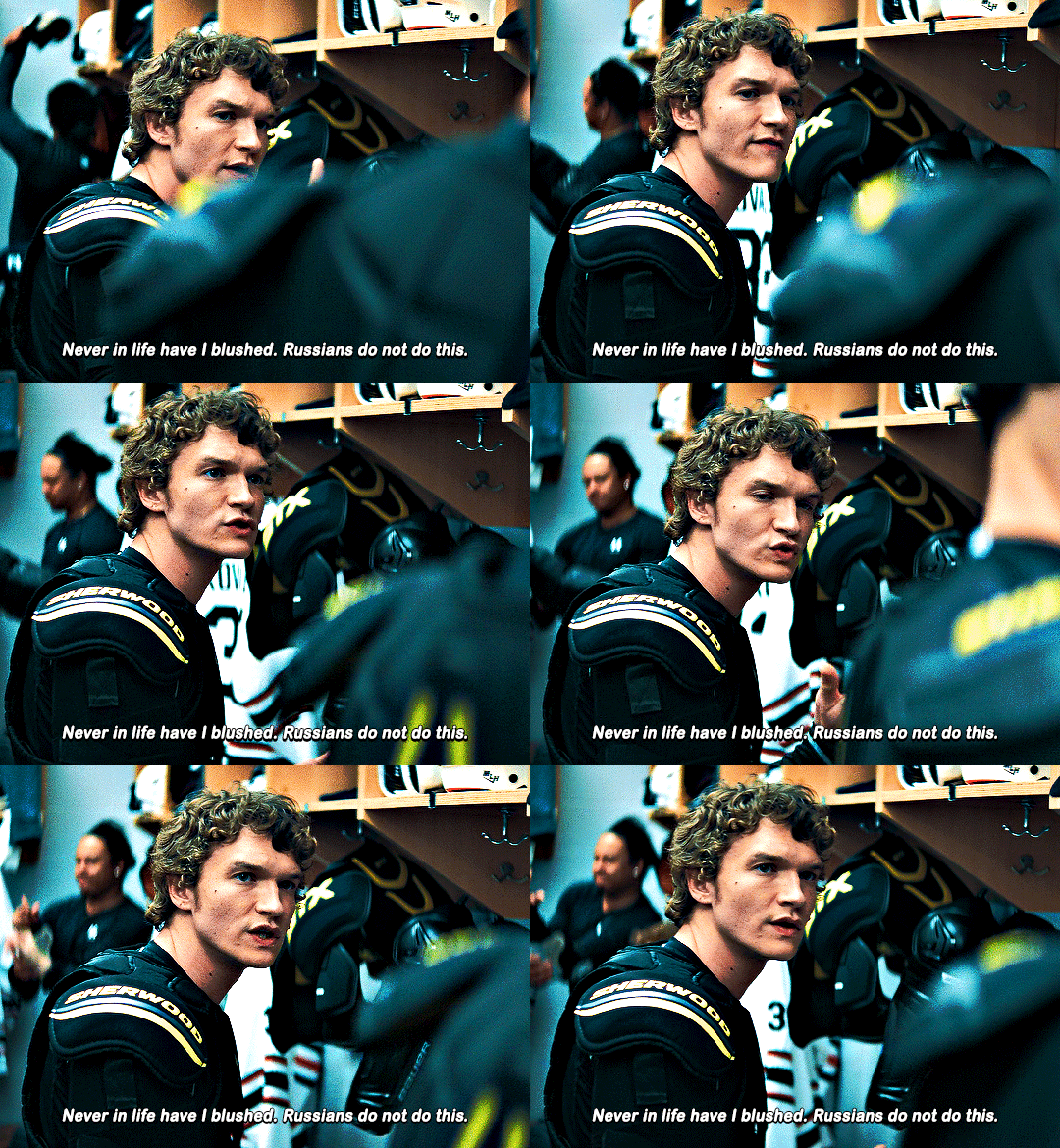
Very important: Do Russians really not blush?
Oh yes, they do :)
Obviously, this show is scratching an itch for everyone right now–and I say that particularly as an American whose society is rapidly crumbling around her and deeply welcomes the ability to dissociate from that for a beat. What is it about Shane and Ilya that you think people are connecting with so intensely?
I think people are responding to how deeply human Shane and Ilya are. They’re flawed, stubborn, tender, and loyal. Their relationship isn’t effortless. They work hard for it, and they actively choose it. In a moment where the world feels unstable, that kind of devotion is incredibly comforting.
Their story touches on sensitive themes around identity, love, and life, but without trying to teach or convince anyone. It simply exists. For me, it’s that sincerity and presence in the characters and their story that resonates so strongly with people.
This show is being distributed by HBOMax in the US and other streamers worldwide, but it is entirely a Crave production. Tell me a little bit about the Canadian television industry and why you think a show like this could only be made in Canada, by Canadian producers.
Canadian television gives creators real room to take risks. There’s less pressure to flatten stories for mass appeal, and more trust in nuance, character, and audience intelligence. Heated Rivalry could exist because Canadian producers are willing to bet on specificity, and that’s often what makes a story feel universal. There’s a genuine openness to creative risk here, and it allows stories like this to exist.
Finally, what’s next for you? Season two of Heated Rivalry? More dialect work on other projects? Something top secret you can exclusively reveal here? Or maybe just a well-earned vacation?
A little of everything, I hope. More dialect work, more casting, maybe more Heated Rivalry, who knows? And yes, eventually, a very good vacation.


Great piece! I’m a native Russian speaker and I was astounded with Connor’s mastery of the language, his mannerisms and facial expressions. I was convinced he was Russian until Google revealed his Texan origins 😂. Kate did a fantastic job!
this was awesome to read. i’m an actor and in one of my favorite acting books, the intent to live by larry moss, he notes how an accent is with the whole body, and connor is a perfect example of that!